


MedNet Joins 2026 National ADR Convention, Shares Work in Mediation and Peacebuilding


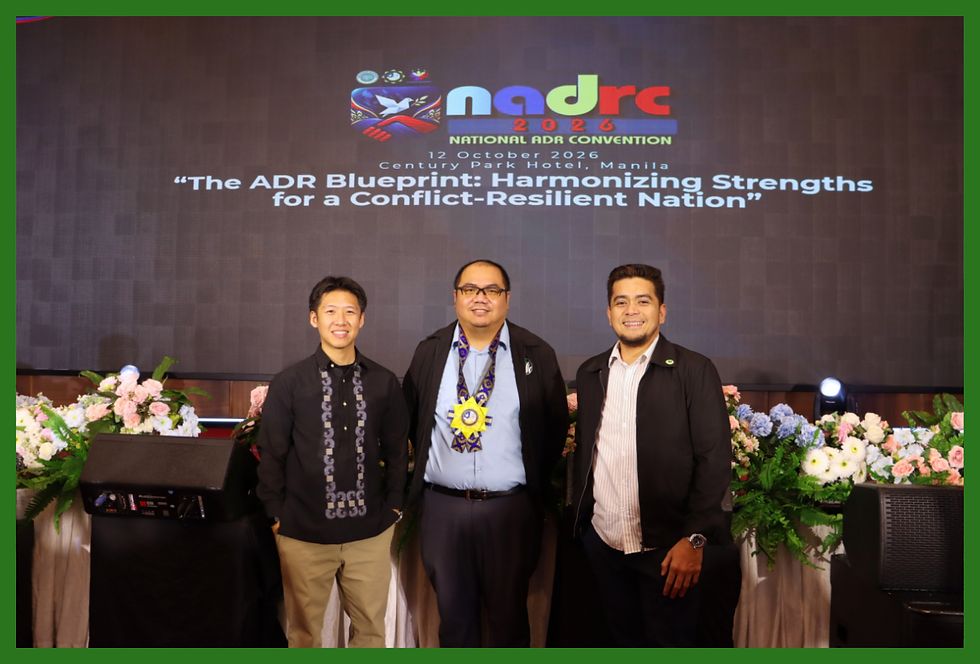
The Mediators Network for Sustainable Peace, Inc. (MedNet) joined the opening of the 2026 Philippine Alternative Dispute Resolution (ADR) Week and the 2026 National Alternative Dispute Resolution Convention (NADRC), held on October 12, 2026, at Century Park Hotel in Manila City. The convention carried the theme “The ADR Blueprint: Harmonizing Strengths for a Conflict-Resilient Nation.”

As a partner institution of the Office for Alternative Dispute Resolution (OADR), MedNet took part in the convention, which brought together practitioners and institutions working to strengthen alternative dispute resolution in the Philippines. During the program, MedNet Executive Director Jhon Robert O. Ko received a Certificate of Recognition on stage on behalf of the organization.

Also present were MedNet President Atty. Allan V. Barcena, Board Member Rachel Aquino, and MedNet Trustee Atty. Brenda Jay Angeles-Mendoza, together with Secretariat members Steven Kiefer Sy, Zeto Eguia, and Mitchie Padilla.

MedNet also set up a booth where convention participants could learn more about its work in mediation, conflict transformation, and peacebuilding. Copies of The Mediator Magazine and MedNet's Conflict Mapping Books were shared with guests, introducing them to the organization's publications and resources.
Joining the convention were MedNet partners Atty. Jonathan Jo of the National Commission on Indigenous Peoples (NCIP), Atty. Michael M. Mamukid, Dr. Rafsan Johnny A. Abdul, and Mr. Shahid P. Akbara of the Ministry of Public Order and Safety (MPOS) of BARMM, and Ms. Berenice Ternate of the Lupong Tagapamayapa Incentives Awards (LTIA).

Building a seamless path from dispute avoidance to enforcement
One of the convention's panel discussions, “Harmonizing the ADR Mechanisms: Building a Seamless Path from Avoidance to Enforcement,” explored how disputes can be prevented, managed, and resolved through effective alternative dispute resolution mechanisms.
The panel was moderated by Atty. Lou Zenith J. Europa, Director III of OADR's Policy, Compliance and Monitoring Service (PCMS). The discussion highlighted the importance of approaching disputes strategically and looking beyond legal practice alone.
Panelist Thara Gopalan, Vice President at the American Arbitration Association's International Centre for Dispute Resolution (AAA-ICDR), likened ADR to a relationship, where understanding the other party and being clear about the terms from the beginning can make a difference when disputes arise.

The discussion also highlighted the importance of understanding the parties involved and the laws that govern their disputes. Alongside international arbitration practices, practitioners must be familiar with local laws and the Philippine legal framework for ADR. Reaching an agreement is only one part of the process. Ensuring that parties comply with it remains a challenge that must be addressed.
Preparing for possible disputes early was another key point. Clear contractual provisions, access to information, communication arrangements, and workable dispute resolution mechanisms can help parties address problems before they escalate. Educating clients about their options and the outcomes they want to achieve is also part of this preparation.
As artificial intelligence becomes more involved in professional practice, ethical considerations and human verification remain important. Technology may assist the process, but people are still responsible for checking information and exercising sound judgment.
Beyond individual cases, the panel stressed that ADR depends on a wider system of support. Courts, government agencies, practitioners, institutions, and businesses all have a role in making dispute resolution mechanisms work. Experiences from Singapore were raised to illustrate the value of coordination among government, the judiciary, and institutions. The discussion also highlighted the need to strengthen ADR education in the Philippines, including the proposal to make it a required part of legal education.
The discussion reflected the convention's broader theme: building a conflict-resilient nation requires more than having dispute resolution mechanisms available. These mechanisms must be understood, coordinated, and supported from the prevention of disputes through to the enforcement of agreements.
Continuing the work of peacebuilding
In her message of support, Hon. Justice Selma Palacio Alaras delivered a call to action for those working toward peace: “Peacemakers must make a stand. OADR must lead the way. This is our chance of peace.”
She followed this with another message for peace workers everywhere: “Peace workers of the world, let us unite, work is just beginning.”
Her words served as a reminder that the work of peacebuilding does not end with discussions or agreements. It requires people and institutions willing to take a stand, work together, and keep pushing for peaceful ways to resolve conflicts.
For MedNet, participation in the convention was an opportunity to engage with fellow practitioners and partners, share its resources, and continue its work in mediation, conflict transformation, and sustainable peace. As the convention emphasized, building a conflict-resilient nation takes more than having ADR mechanisms in place. It takes a collective effort to make them work.
Written by: Mitchie Padilla


Comments